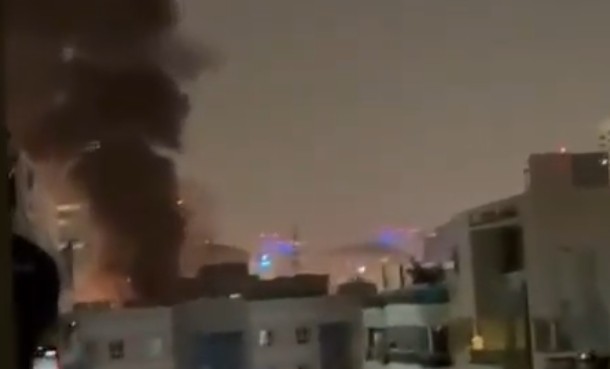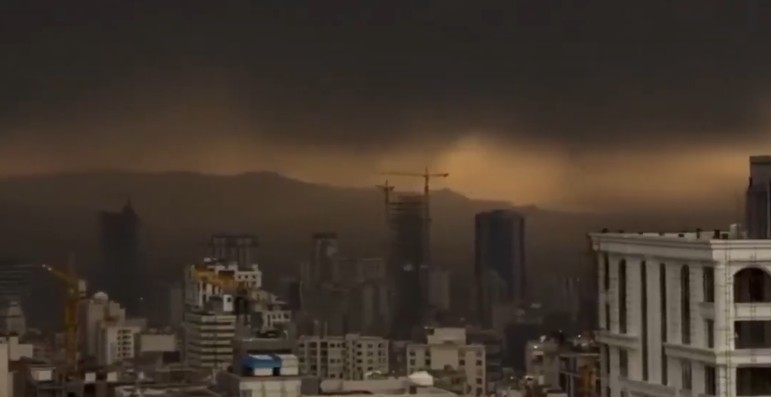
Tehran woke up to a shocking scene on Sunday morning. After major airstrikes by US and Israeli forces hit important oil facilities near the Iranian capital, residents reported a strange and frightening event, “black rain.”
Rain mixed with soot and oil particles from burning refineries began falling over parts of the city, leaving roads, buildings, and vehicles covered in a dark, sticky layer.
Daytime Turns Into Darkness
People living in Tehran, a city of nearly 10 million residents, said the sky suddenly became unusually dark.
Huge clouds of smoke from burning oil depots had already filled the air overnight. When normal rain clouds moved over the city, they mixed with the thick black smoke. Soon after, dark-colored rain began falling in several areas.
Many residents said it felt like the city was suddenly pushed into darkness.
“I thought my alarm clock had stopped working,” one resident said, explaining that the sunlight had almost disappeared by around 10:30 in the morning.
Drivers on busy roads, including the well-known Valiasr Street, had to turn on their headlights during the daytime because the sky had become so dark.
What Is ‘Black Rain’?
Although it sounds unusual, the reason behind black rain is fairly simple.
When large oil facilities like the Shahran oil depot and the Tehran refinery catch fire or are damaged, they release large amounts of pollution into the air. These include:
- Hydrocarbons
- Sulfur dioxide
- Nitrogen oxides
When these pollutants mix with rainwater in the atmosphere, the rain can become dark, oily, and sometimes acidic.
Experts say this type of rainfall can happen during major oil fires or industrial disasters, though it is not common.
Health Concerns for Residents
Authorities have warned people not to go outside unless necessary. The Iranian Red Crescent has asked residents to stay indoors and avoid contact with the rain.
Health experts say the rain and the polluted air could cause several problems:
Skin irritation:
The rain may contain acidic chemicals that can irritate the skin.
Breathing problems:
Breathing in soot and smoke particles could damage the lungs, especially for people who already have breathing issues.
Water contamination:
Officials are also worried that polluted rainwater could flow into local reservoirs and affect Tehran’s drinking water.
A local teacher described the situation by saying, “The rainwater looks black and oily. The air even feels like it’s burning your eyes and skin.”
Impact Beyond Iran
The situation is not only affecting Tehran. Tensions in the region are rising after the strikes on Iran’s oil infrastructure.
There are also concerns about possible disruptions near the Strait of Hormuz, a key route used to transport oil around the world.
At the same time, Iran has reportedly responded by targeting regional infrastructure, including a desalination plant in Bahrain.
Because of these developments, global oil prices have jumped sharply, reaching levels last seen during the pandemic period.
What Happens Next?
For now, thick smoke still hangs over parts of Tehran, and authorities are closely watching air quality and water safety.
Experts say the pollution from the fires could remain in the air for several days, even if the rain stops.
As the situation develops, many people are wondering whether this will remain an environmental emergency or if it could signal a larger crisis unfolding in the Middle East.