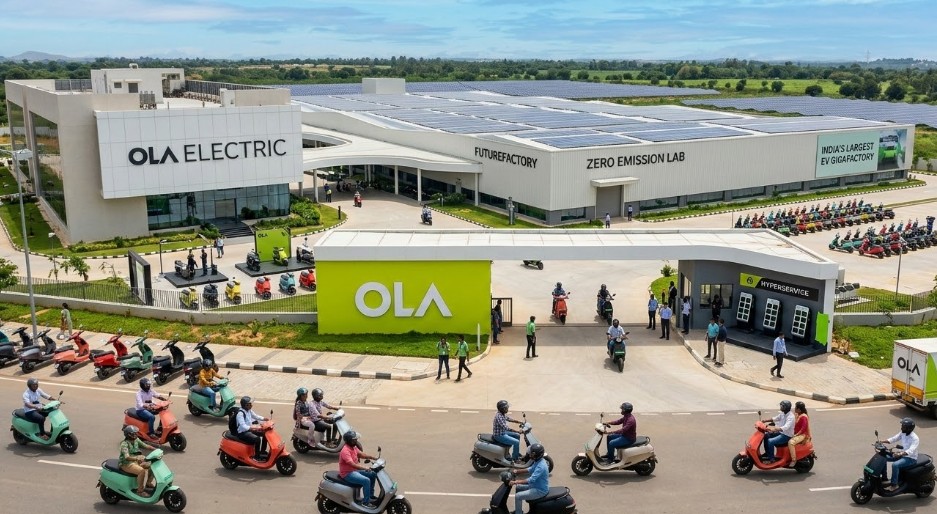
Not too long ago, Ola Electric was the clear leader in India’s electric two-wheeler market. Led by founder Bhavish Aggarwal, the company promoted its bold “#EndICEAge” message and quickly became one of the most talked-about EV brands in the country.
But things look very different in March 2026.
Sales have slowed sharply, competition has grown stronger, and investors are beginning to worry. A company that once dominated the EV scooter market is now facing one of its toughest phases yet.
Here’s a closer look at what’s happening and why the market is reacting cautiously.
Sales Numbers Raise Concerns
Recent figures from the government’s vehicle registration database, the Vahan Portal, show a sharp fall in Ola Electric’s sales.
In February 2026, the company sold just 3,968 scooters. This is one of its lowest monthly numbers since the company began scaling up its EV business around 2022.
To understand the drop, compare it with last year. During 2025, Ola Electric was regularly selling 30,000 to 50,000 scooters every month.
The slowdown has been so steep that the company has even fallen out of India’s top 10 two-wheeler manufacturers by monthly registrations.
Meanwhile, companies like Greaves Electric Mobility, which sells electric scooters under the Ampere brand, have moved ahead in the rankings.
What’s Causing the Slowdown?
Several issues appear to be affecting the company at the same time.
Service Problems
Customer service has been a major concern for many buyers. Some users have reported:
- Software issues in scooters
- Delays in repairs and spare parts
- Long waiting times at service centres
Even though the company has promised improvements, these complaints have hurt customer confidence.

Stronger Competition
Traditional two-wheeler companies such as TVS Motor Company and Bajaj Auto have expanded their electric scooter offerings.
These companies already have large dealership and service networks across India, which gives them an advantage when selling and servicing EVs.
Rising EV Startups
New-age EV brands are also gaining ground. One example is Ather Energy, which has been expanding its retail presence and launching new models.
At one point recently, Ather even surpassed Ola Electric in market value, showing how quickly the EV race is changing.
Financial Pressure Adds to the Challenge
The slowdown in sales has also affected the company’s financial performance.
In its Q3 FY26 results, Ola Electric reported:
- Revenue: ₹470 crore
- Year-on-year decline: about 55%
The company did say its gross margin improved to 34.3%, which means it is becoming more efficient in production.
However, investors appear more worried about falling sales and weaker demand than about improving margins.
The Big Bet: Batteries and New Products
Even with the current slowdown, Ola Electric is pushing ahead with its long-term plans.
In-House Battery Cells
The company has started using its own 4680 “Bharat Cells” in some vehicles. If this plan works well, it could reduce battery costs, which are one of the most expensive parts of an electric vehicle.
Lower battery costs could eventually help the company offer more competitive prices.

Faster Service Plans
Ola Electric has also launched a new service initiative called HyperService. According to the company, the goal is to solve about 80% of service requests within 24 hours.
Improving after-sales support could be key to winning back customer trust.
Expanding Beyond Scooters
The company is also entering new segments. It was recently introduced:
- Ola Shakti, a home energy storage product
- The Ola Roadster, an upcoming electric motorcycle lineup
These launches show that the company wants to build a broader electric mobility and energy ecosystem, not just sell scooters.
Ola Electric still has strong brand recognition and ambitious manufacturing plans. But the next few months will be important.
The company needs to improve service quality, stabilize sales, and keep up with rising competition in India’s fast-growing EV market.
For now, the EV pioneer that once dominated headlines is facing a difficult stretch, and investors will be watching closely to see if it can regain momentum.