The Middle East is on the boil, and for India, the impact isn’t limited to headlines. It could soon be felt at petrol pumps and inside household kitchens.
As tensions between Iran and Israel escalate into open confrontation, the world’s most critical oil chokepoint, the Strait of Hormuz, has turned into a geopolitical flashpoint.
For India, which imports nearly 88% of its crude oil needs, this is not a distant geopolitical drama. It’s a direct economic risk.
The “Hormuz” Headache: Why This Narrow Route Matters So Much
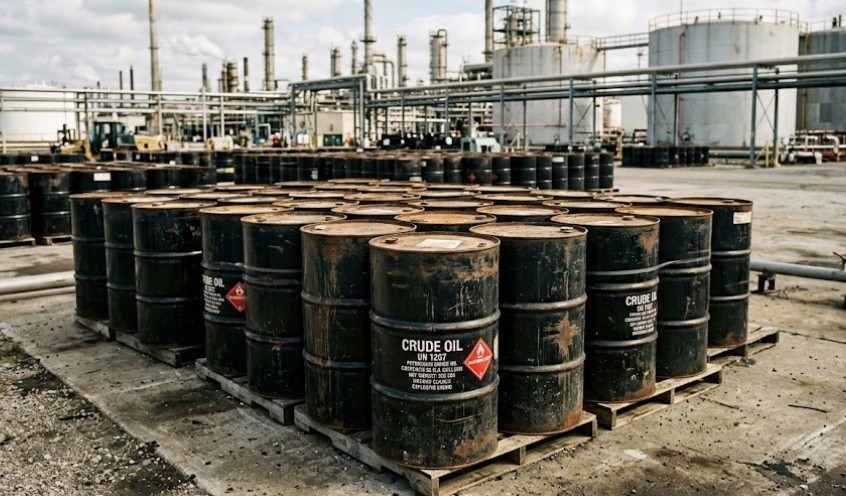
Think of the Strait of Hormuz as a narrow strait through which nearly 20% of the world’s oil supply flows. Any disruption here sends shockwaves across global energy markets.
For India, the dependence is even more intense. Over 40–50% of India’s crude imports, roughly 2.7 million barrels per day, pass through this 33-km-wide waterway.
But oil is only part of the story.
Around 80–85% of India’s LPG (cooking gas) imports come from Gulf countries.
Nearly 60% of India’s LNG (liquefied natural gas) supplies also originate in the region.
Key suppliers such as Saudi Arabia, Qatar, and the United Arab Emirates depend on shipments that must pass through Hormuz.
Now, with reports of shipping suspensions, rising war-risk insurance premiums, and vessels avoiding the region, India’s earlier logistical advantage where shipments would arrive in just 5 to 7 days, is quickly eroding.
Longer routes mean higher freight costs. Higher freight costs eventually mean higher consumer prices.
The Price Shock: Is $100 Oil Around the Corner?
Global markets are already reacting nervously.
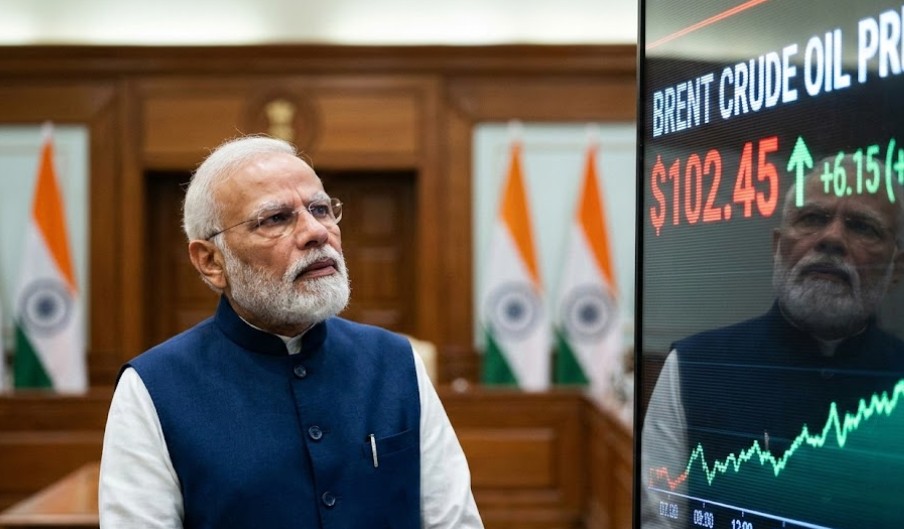
Brent crude has surged past $80 per barrel, and analysts warn that even a partial blockage of the Strait could push prices to $100 or even $120 per barrel.
Why does this matter to you?
Because oil touches everything.
Every $10 rise in crude prices can increase India’s retail inflation (CPI) by roughly 0.2–0.25%.
Transportation costs go up.
Prices of daily-use goods, from biscuits to paints to vegetables, begin to climb.
A higher oil import bill also means India needs more dollars to pay for crude. That puts pressure on the Indian Rupee, which is already hovering near the 91–93 mark against the US dollar.
The stock market is feeling the heat, too:
Upstream producers such as ONGC and Oil India benefit from higher crude prices, as they sell oil at elevated prices.
But downstream refiners such as Indian Oil Corporation, Bharat Petroleum Corporation Limited, and Hindustan Petroleum Corporation Limited face margin pressure, especially if retail fuel prices remain regulated.
In short, while producers cheer, fuel retailers sweat.
India’s Plan B: Can New Delhi Steer Through the Storm?
The government isn’t sitting back.
New Delhi is working on a multi-layered strategy to cushion the blow:
Strategic Petroleum Reserves
India maintains underground crude storage facilities designed precisely for emergencies. These reserves can provide temporary relief if supplies are disrupted, buying the country valuable time.
The Russian Pivot
India has significantly increased imports from Russia in recent years. Russian crude travels through alternative routes, bypassing Hormuz. While this offers flexibility, it also brings diplomatic complexities and logistical adjustments.
Rerouting Shipments
Some tankers are already being diverted via the Cape of Good Hope. While safer, this route adds 15–20 days to the journey, dramatically increasing freight costs and delivery timelines.
Energy markets expert Sumit Ritolia, Lead Analyst at Kpler, sums it up clearly: India is materially exposed to the Strait of Hormuz not just for crude oil, but even more so for LPG and LNG.
And here’s the worrying part:
While India has strategic reserves of crude oil, it does not have similarly large-scale reserves of cooking gas. That makes Indian households particularly vulnerable if gas supplies tighten.
A Real Stress Test for India’s Energy Strategy
Over the past few years, India has worked hard to diversify its energy basket, sourcing crude from the US, Russia, Africa, and Latin America. But a prolonged disruption in the Strait of Hormuz would present a challenge unlike any other.
For now, consumers are partly shielded by government subsidies and tax adjustments. But if $100 oil becomes the “new normal,” maintaining that cushion will become increasingly difficult both fiscally and politically.
The Iran–Israel conflict may be unfolding thousands of kilometres away. Yet, its ripple effects could soon land much closer to home in your fuel bill, your LPG cylinder cost, and your monthly grocery expenses.