It was nothing short of a nightmare for investors on Wednesday. Sensex Down and Dalal Street witnessed heavy selling, and in just one session, nearly 9 lakh crore of investor wealth was wiped out.
The reason? Rising tensions in the Middle East spooked global markets, and India was no exception.
Sensex and Nifty End Deep in the Red
Markets opened sharply lower and never really recovered during the day. Every small bounce was met with more selling.
BSE Sensex fell 1,122.66 points (1.40%) to close at 79,116.19. At one point, it was down nearly 1,800 points intraday.
NSE Nifty 50 dropped 385.20 points (1.55%) to settle at 24,480.50 — its lowest closing level in over six months.
India VIX, often called the market’s fear gauge, jumped over 18% and crossed the 21 mark, showing rising nervousness among traders.
Midcap and smallcap stocks also saw strong selling pressure, indicating that the weakness was spread across the market.
What Triggered the Crash?
It wasn’t just one reason. A mix of global worries and domestic concerns led to the sharp fall.
Rising War Tensions in West Asia
The ongoing conflict involving the US, Israel, and Iran intensified, with fresh reports of missile strikes. Investors were particularly worried about the possibility of disruption in the Strait of Hormuz, a key route for global oil shipments.
Whenever geopolitical tensions rise, markets turn cautious, and this time was no different.
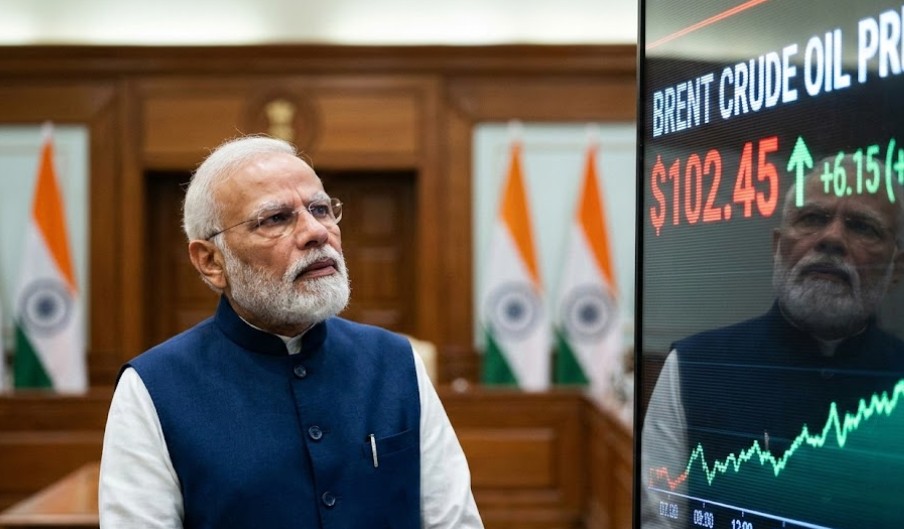
Crude Oil Prices Spike
Brent crude moved closer to $83 per barrel. For India, which imports nearly 80% of its oil needs, higher crude prices are bad news.
Costlier oil can push up inflation, widen the trade deficit, and hurt company profits.
Rupee Hits Record Low
The Indian Rupee fell to a record low of 92.18 against the US Dollar. A weaker rupee makes imports more expensive and adds pressure on businesses that rely on foreign inputs.
FII Selling Continues
Foreign Institutional Investors (FIIs) kept selling Indian equities. In uncertain times, global investors tend to move money from emerging markets like India to safer options such as gold and US bonds.
This continued outflow added to the pressure on markets.
Industrial Growth Slows
India’s industrial production (IIP) growth slowed to 4.8%, a three-month low. While not alarming yet, it added to concerns about the strength of the economic recovery.
What Should Investors Do?
The market fall looks scary, but experts say panic selling is not the answer.
If you are a long-term investor and hold quality stocks, it may be better to stay calm and avoid emotional decisions. Volatility is part of the market, especially during global tensions.
That said, caution is important. With the geopolitical situation still evolving, markets may remain volatile in the near term. The “buy the dip” approach should be used carefully and only in fundamentally strong stocks.
For now, investors will closely watch crude oil prices, foreign investor activity, the rupee’s movement, and further updates from the Middle East.
When global uncertainty rises, markets react quickly. Stability usually returns, but patience becomes the key