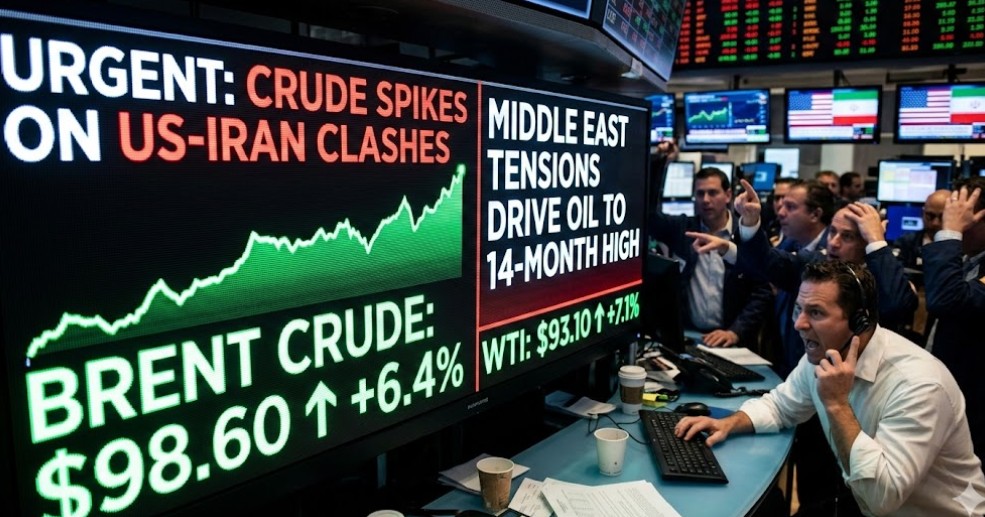
The global energy market is on edge again. With tensions between the United States and Iran escalating into active military strikes as of February 28, 2026, the “fear factor” has firmly returned to the driver’s seat.
For everyday consumers and investors, this isn’t just another geopolitical headline. If the situation worsens, it could show up quickly at the petrol pump and possibly shake up your investment portfolio too.
The Current Situation: Why Prices Are Climbing
After the military actions on February 28, 2026, oil benchmarks opened with a sharp “gap-up,” as traders rushed to price in the risk of supply disruptions.
Brent Crude: Currently hovering around $73 per barrel. Experts warn it could test $80, and if tensions persist, even $100 isn’t off the table.
West Texas Intermediate (WTI): Up more than 20% so far this year, recently touching seven-month highs near $67–$68.
What’s driving this spike? Traders are adding what’s known as a “war premium,” an extra cost built into every barrel, simply because of the risk that oil supply could suddenly be disrupted.
In simple terms, markets hate uncertainty. And right now, uncertainty is in abundance.
The ‘Choke Point’ That Has Everyone Worried
The biggest concern for the global energy market isn’t just the conflict itself, it’s geography. At the centre of the storm lies the Strait of Hormuz, a narrow waterway that serves as the world’s most critical oil transit route.
Roughly 20 million barrels of oil pass through this route every single day, about 20% of global oil consumption. If Iran attempts to block or disrupt traffic here in retaliation, global supplies could tighten overnight.
In such a scenario, analysts at Bloomberg and several major investment banks suggest oil prices wouldn’t just rise gradually, they could spike sharply, potentially crossing $100 per barrel within weeks. That’s the worst-case scenario the market is nervously watching.
What It Means for You
The immediate outlook is likely to remain volatile. Expect sharp swings in prices as fresh headlines emerge. Investors may want to keep a close watch on market openings, especially at the start of the week when global markets react to weekend developments.
For the general public, the impact could be more direct:
- Higher fuel prices
- Rising transportation and logistics costs
- Potential pressure on inflation
- Possible delays in long-awaited interest rate cuts
However, there’s another side to the story. Experts point out that global oil markets are currently well-supplied. Strategic reserves in key economies and output from major producers are acting as a cushion for now.
Unless the Strait of Hormuz is physically blocked or major infrastructure is damaged, prices may stabilize once the initial panic fades. Markets often react sharply at first, only to cool down when worst-case fears fail to materialize.
The Big Question: Shock or Structural Shift?
Is this a short-term spike driven by fear? Or the beginning of a sustained rally toward $100 oil?
Much will depend on how long tensions persist and whether the conflict spreads beyond limited military action. For now, the “war premium” is real, but so is the possibility of stabilization if cooler heads prevail.
One thing is clear: crude oil is back in the spotlight. And in times like these, even a single headline can move billions of dollars in minutes.