For years, Dubai has been the world’s ultimate “escape pod.” From the Arab Spring to Covid lockdowns and rising taxes in Europe, the script barely changed: pack your bags, head to Dubai, and leave behind both uncertainty and high taxes.
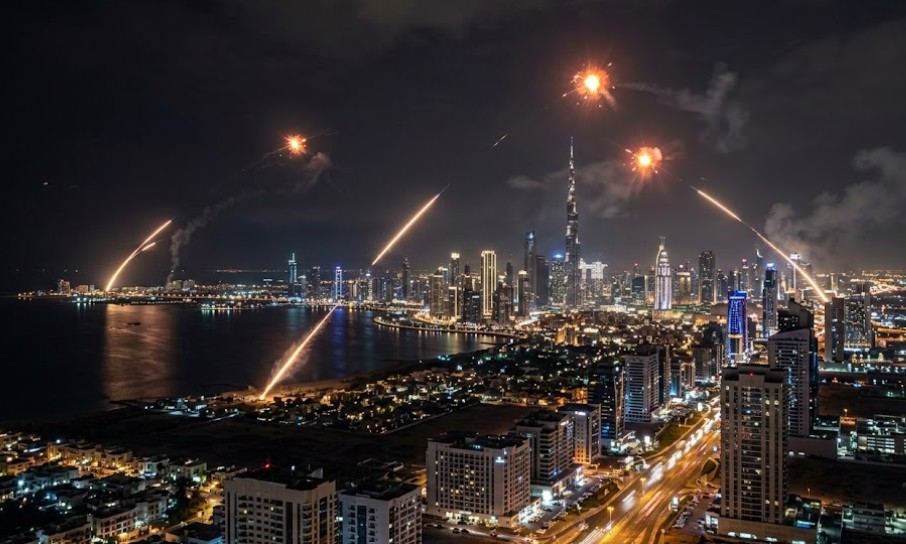
But in the last 48 hours, that glossy, chrome-and-glass image has faced its toughest test yet. As tensions escalated between Iran and joint US-Israeli forces, missiles and drones lit up the Gulf sky. And suddenly, the city often called the “Switzerland of the Middle East” found itself uncomfortably close to the action.
High-Stakes Drama
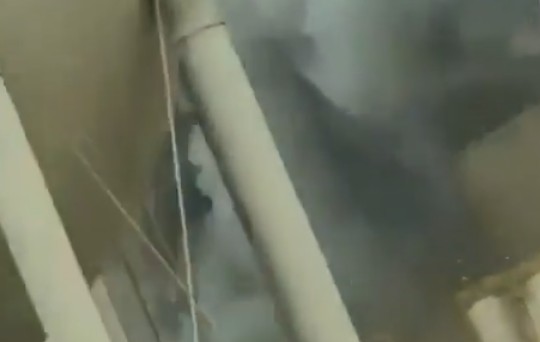
The unthinkable unfolded on Sunday. Dubai International Airport, the world’s busiest international transit hub, was forced to halt operations after sustaining damage from aerial strikes.
Scenes of panic inside terminals quickly replaced the usual Instagram reels of gold vending machines and ultra-luxury lounges. Videos showed travelers scrambling for safety, an image that felt surreal for a city that markets itself as a haven of calm in a chaotic region.
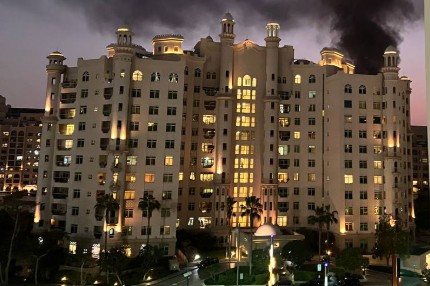
From the iconic Palm Jumeirah to industrial districts on the city’s outskirts, the soundscape changed overnight. Instead of construction cranes and supercar engines, residents heard air defense systems intercepting aerial threats.
For a city that effectively sells “peace of mind” as a premium product, the psychological blow has been significant. Beyond physical damage, it’s the shift in perception that may matter most.
Dubai’s Brand Under Pressure
Dubai’s global appeal rests on two core promises: unshakable safety and tax-free living. Both are now facing scrutiny.
The Safety Premium Is Being Repriced
Investors don’t just relocate to Dubai for sunshine and skyline views. They come for predictability and stability. That confidence was tested when the UAE temporarily shut its financial markets — Dubai Financial Market (DFM) and Abu Dhabi Securities Exchange (ADX), for 48 hours to prevent extreme volatility.
The message was unmistakable: geopolitics is no longer a distant issue. It’s local.
Real Estate Impact:
Dubai’s property market has been one of the biggest beneficiaries of global uncertainty. Capital flight from Russia, Europe, and parts of Asia poured into high-end villas and waterfront apartments. But when airspace closures and missile alerts enter the equation, even the most luxurious address can start to feel exposed.
Historically, Dubai’s property market has rebounded from oil crashes and speculative bubbles. However, prolonged regional instability could make global buyers rethink how much “risk premium” they are willing to pay, or ignore.
Tourism Takes a Direct Hit
Tourism is the lifeblood of Dubai’s economy. Flight suspensions, airspace restrictions and heightened security alerts could deliver the sharpest shock to the sector since 2020.
Hotels, airlines, retail malls, and entertainment hubs, all deeply interconnected, depend on the city’s image as a seamless, stress-free global transit point. Any sustained disruption could ripple across these sectors.
The Fading “Absolute” Tax-Free Tag
Even before missiles streaked across the Gulf sky, Dubai’s “tax-free” halo had already started to dim.
In 2023, the UAE introduced a 9% corporate tax, a landmark shift for a country long known for zero direct taxation. Large multinational companies are also preparing to align with the OECD’s global minimum tax framework, potentially facing an effective 15% rate.
Add to that the existing 5% VAT, and the once-simple “zero-tax paradise” narrative looks more nuanced.
Now, defense spending is rising. Advanced air defense systems like the “Iron Hawk” and “Patriot” batteries come with hefty price tags from procurement to maintenance.
Could personal income tax, long considered unthinkable, enter the conversation one day?
Might VAT rates rise beyond the current 5% to fund mounting security and infrastructure costs?
There are no official signals yet. But the conversation itself marks a shift.
Is the Dream Over? Not So Fast
Despite the shock, few believe Dubai’s story ends here.
The city has a proven track record of resilience. It has weathered oil slumps, financial crises, and property market crashes. Each time, it recalibrated and returned stronger, often repositioning itself as a more diversified global hub.
But something fundamental has changed.
The illusion of being a neutral, untouchable bubble in a turbulent region has been pierced. Investors are now recalculating what analysts call a “risk premium” for operating in the UAE.
It’s no longer just about saving on income tax. It’s about evaluating geopolitical exposure, supply chain risks, and long-term stability in a region where tensions can escalate quickly.
A New Sales Pitch for Dubai
Dubai isn’t going anywhere. Its infrastructure, connectivity, and pro-business ecosystem remain powerful advantages. The emirate still offers world-class ports, aviation links, and financial services that few regional peers can match.
But the narrative is evolving.
From an “Untouchable Paradise,” Dubai is repositioning itself, perhaps inevitably, as a “Resilient Global Hub.” A city that may face shocks, but adapts fast.
For the thousands of expats, entrepreneurs, and billionaires who call it home, the key question is no longer just, “How much can I save?”
It’s also: How secure is my investment and my skyscraper in an increasingly unpredictable world?