Tehran’s skyline lit up late at night as a series of powerful airstrikes hit important military locations in the Iranian capital. The Israel Defense Forces carried out the operation with strategic backing from the United States.
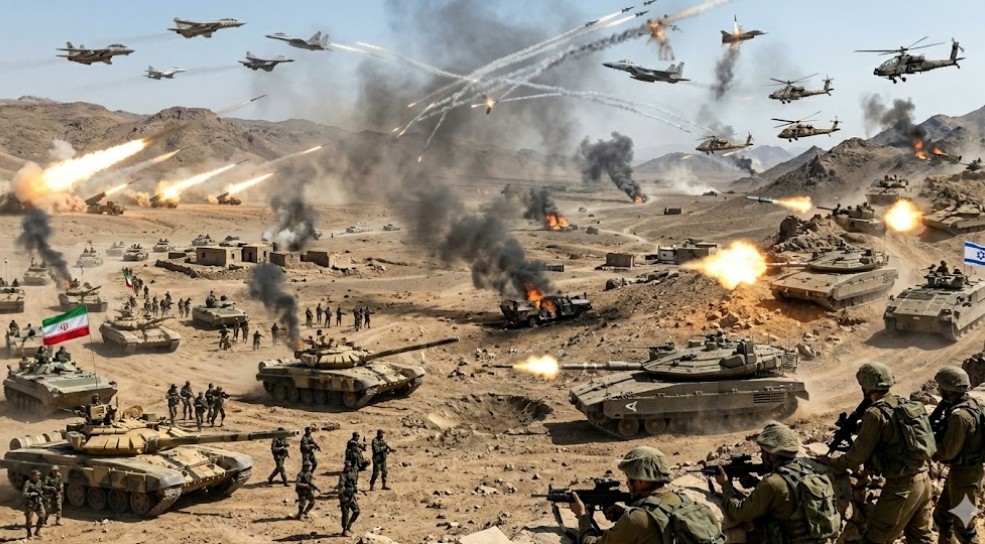
The main targets were facilities linked to the Islamic Revolutionary Guard Corps (IRGC), including a major base and areas near Mehrabad International Airport. According to reports, more than 80 fighter jets were involved in the attack.
The scale of the strikes has raised tensions in the region and drawn attention from governments around the world, as fears grow that the conflict could widen further.
What Happened During the Strike?
The attack reportedly began in the early hours of Saturday, March 7, 2026. People living in different parts of Tehran said they heard loud explosions and saw flashes in the sky as the strikes unfolded.
Israeli military officials later shared details about the targets.
Quds Force Aircraft Destroyed
Officials said 16 aircraft belonging to the IRGC’s elite Quds Force were destroyed while parked at the airport. The Quds Force handles many of Iran’s overseas military operations.
Missile Facilities Hit
The strikes also targeted underground facilities believed to be used for storing and producing ballistic missiles.
Command Centre Damaged
Israel said it struck a key command facility used by the IRGC Air Force to coordinate air defense and military operations.
Military Training Site Targeted
Another site that was hit was Imam Hossein University, which is linked to training IRGC officers. Israeli officials said the location was being used for military purposes.
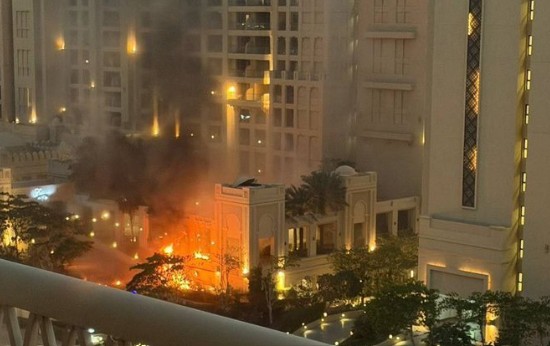
Local residents reported seeing smoke rising from different parts of the city after the strikes.
Why the Strikes Happened Now
The attack comes as the conflict enters its eighth day, with both sides increasing military pressure.
US President Donald Trump has recently signaled stronger action against Iran. The focus appears to be on weakening Iran’s military capabilities and limiting its support for regional groups such as Hezbollah.
The United States Central Command (CENTCOM) said that thousands of strikes have taken place in recent days as part of a broader campaign called Operation Epic Fury.
According to analysts, the operation is mainly aimed at damaging Iran’s missile network and military infrastructure, while also reducing the influence of the IRGC.
Iran Responds With Missile Attacks
Iran responded soon after the strikes.
Several ballistic missiles were launched toward Israel, setting off air raid sirens in cities like Tel Aviv and Jerusalem. Israeli defense systems intercepted most of the incoming missiles, according to officials.
Iran’s President Masoud Pezeshkian rejected calls from Washington for “unconditional surrender,” saying such demands were unrealistic.
Reports from Iran also suggest that the strikes caused damage to military facilities and may have affected key commanders.
Rising Tensions and Global Concern
The situation has sparked concern across the international community. The United Nations Security Council has already held emergency discussions, but no agreement has been reached on how to respond.
With both sides continuing military actions and diplomacy making little progress, experts warn that the conflict could grow larger in the coming days. For now, the region remains on high alert as the world watches what happens next.