The Middle East is witnessing one of its most explosive moments in decades, and the tremors are being felt far beyond the region. After a massive joint military strike by the United States and Israel on Iran, anger spilled onto the streets of Karachi, where protesters targeted the US Consulate, dragging the escalating conflict to South Asia’s doorstep.
What began as a high-intensity military operation thousands of miles away has now sparked unrest in one of Pakistan’s largest cities, underlining just how interconnected global flashpoints have become.
The Spark: A Night of ‘Epic Fury’
The geopolitical landscape shifted dramatically this weekend.
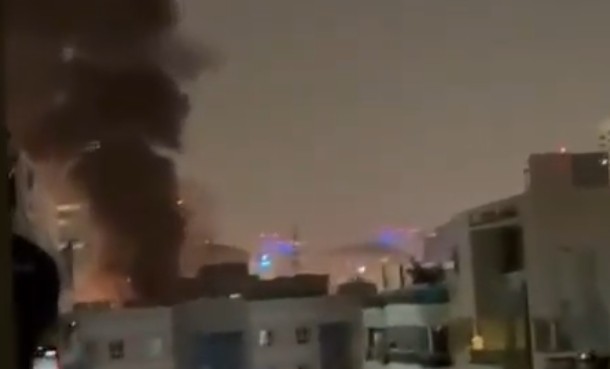
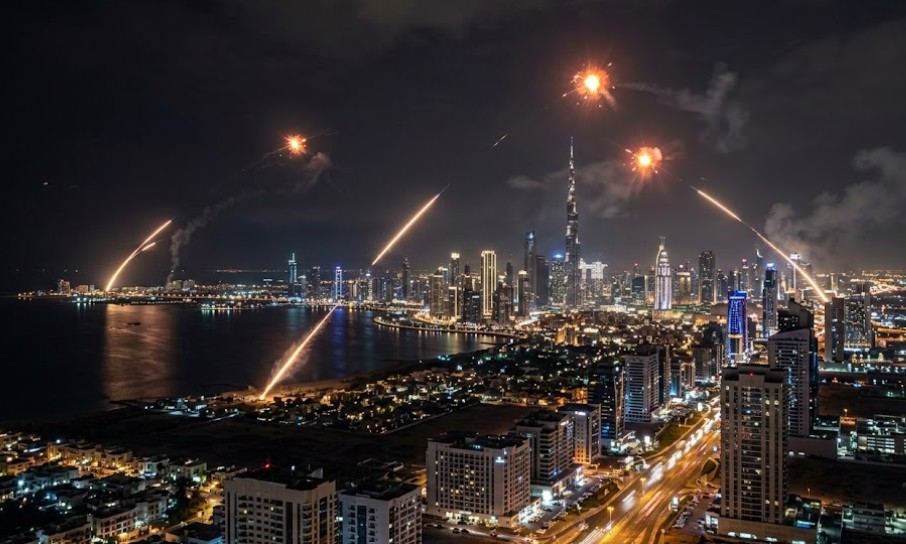
In a coordinated operation reportedly named “Operation Epic Fury,” the US and Israel carried out a wave of powerful airstrikes across Iran. The stated objective: dismantle Tehran’s nuclear and missile infrastructure in a decisive blow.
The strikes, however, took an even more dramatic turn when reports confirmed the death of Iran’s Supreme Leader, Ayatollah Ali Khamenei, during an attack on his compound.
Washington has framed the move as “justice” and a step toward reshaping Iran’s political future. But across much of the Islamic world, the reaction has been swift and furious. Protests have erupted in multiple countries, with outrage dominating public discourse and social media.
The development marks a defining moment in US–Iran relations, long strained over sanctions, nuclear ambitions, and regional influence, but rarely pushed to this extent in a single operation.
Karachi in the Crosshairs
The aftershocks were quickly felt in Pakistan.
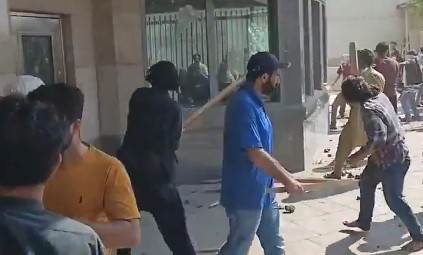
In Karachi, the country’s financial hub and port city, what began as a protest rapidly spiraled into chaos. Hundreds of demonstrators marched toward the US Consulate, chanting slogans and condemning the airstrikes.
The situation escalated when parts of the crowd smashed windows and attempted to breach the heavily fortified diplomatic compound.
Law enforcement agencies, including police and paramilitary forces, responded with batons and tear gas to disperse the mob. In the clash that followed, at least one protester was reported dead, while several others sustained injuries.
The unrest highlights the delicate balancing act Pakistan now faces. The country maintains complex diplomatic and economic ties with both Washington and Tehran. Rising anti-West sentiment on the streets could complicate that equation further.
Regional Backlash Growing
Karachi is not alone.
Similar scenes are being reported in Baghdad, where protesters attempted to breach the heavily guarded Green Zone, home to foreign embassies and key government buildings. The developments point to a broader regional backlash against American diplomatic missions.
For governments across the region, the immediate priority is containing unrest while preventing diplomatic compounds from becoming flashpoints of violence.
Security agencies are likely to remain on high alert in the coming days, especially around foreign missions.
What Happens Next?
The conflict now stands at a critical juncture.
Will the confrontation remain limited to airstrikes and retaliatory exchanges? Or are we on the brink of a wider military escalation, potentially even a ground intervention?
Much will depend on Iran’s next move and how global powers respond. Energy markets, already sensitive to Middle East tensions, could face fresh volatility. Diplomatic channels, if still active, may come under intense pressure.
One thing is clear: the fallout from “Operation Epic Fury” is no longer confined to Iran. From the Persian Gulf to the streets of Karachi, the ripple effects are unfolding in real time, and the coming week could prove decisive for the region and beyond.