The Iran War is getting intense day by day. The killing of Iran’s Supreme Leader Ayatollah Ali Khamenei has sparked strong reactions across India. From Kashmir to Lucknow and Delhi, thousands of people stepped out to protest against the US-Israeli airstrike that reportedly killed the 86-year-old leader.
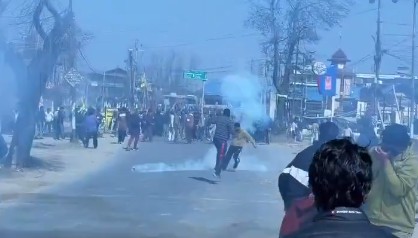
What started as small gatherings quickly turned into large protests, especially in areas with sizable Shia populations. Many people held prayer meetings, raised slogans, and observed shutdowns as a mark of respect.
A Wave of Protests Across States
Ever since the news broke on February 28, 2026, several parts of India have seen emotional scenes. People gathered in public squares, carried posters, and offered prayers. In some places, local markets remained closed.
Police presence was increased in sensitive areas to ensure the protests remained peaceful. Community leaders also urged people to maintain calm.
Srinagar & Kargil
The biggest gatherings were reported from the Kashmir Valley. In Srinagar’s Lal Chowk, thousands of men, women, and children gathered near the clock tower, holding pictures of Khamenei and raising slogans.
In Kargil, too, large processions were held. Religious leaders addressed crowds, calling the killing a major loss for the community.
Lucknow
Lucknow, known for its deep-rooted Shia culture, saw protests near the historic Bara Imambara.
Many shops in the area remained shut as people assembled to express their anger and grief. Slogans were raised against the US and Israel, and special prayer meetings were organised in several neighbourhoods.
Delhi
In the national capital, a protest was held at Jantar Mantar, a common site for demonstrations.
Several Muslim organisations and political groups called the killing an act of “imperialism” and demanded that the Indian government take a clear stand on the issue.
“He wasn’t just a leader for Shias; he was a voice against oppression for many,” said one protester in Delhi.
What Happened in Tehran?
The protests followed reports of a joint US-Israeli airstrike in Tehran on Saturday. The strike allegedly targeted the Supreme Leader’s compound.
At first, Iranian officials dismissed the reports as “mental warfare.” But later, state media confirmed that Khamenei had been killed. Reports also said that several members of his family, including his daughter and grandchildren, died in the strike.
The development has increased tensions in West Asia, with fears that the situation could worsen.
Political Reactions in India
The issue has also led to sharp political reactions in India.
Leaders from the Congress and Left parties criticised the Centre’s silence. CPI(M) leader Brinda Karat questioned the timing of the strike, noting that it happened soon after Prime Minister Modi visited Israel.
Jammu and Kashmir Chief Minister Omar Abdullah said he felt “profound anguish” over the killing. He appealed for peace and said his government was in touch with the Ministry of External Affairs to ensure the safety of Indian students in Iran.
For now, protests continue in several cities. While the events took place thousands of kilometres away, their impact is clearly being felt on Indian streets.